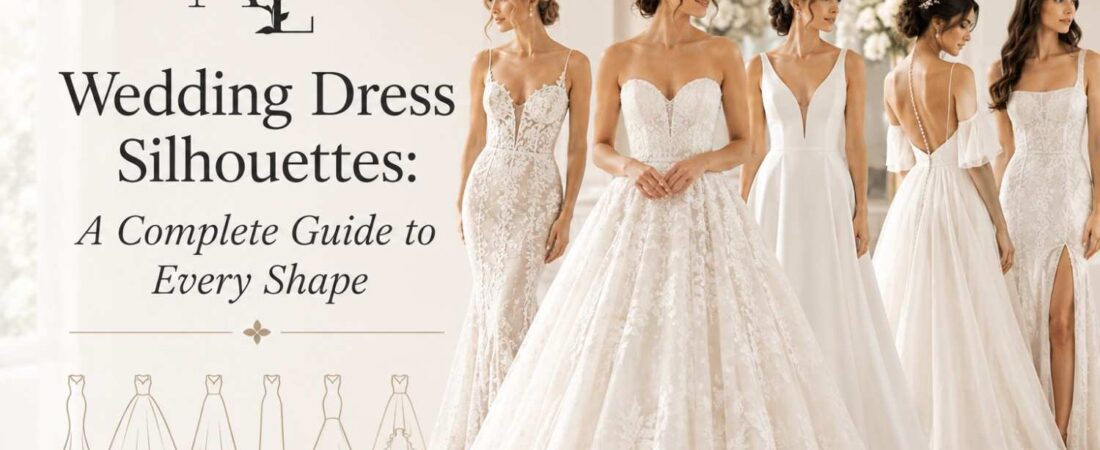
What is a Wedding Dress Silhouette?
Wedding dress silhouettes describe the overall shape and structure of a gown, from the way the bodice fits through the waist to how the skirt falls toward the hem. A silhouette determines the gown’s overall proportion, volume, movement, and visual character. It can make a dress feel soft and flowing, structured and dramatic, sleek and modern, or traditionally romantic.
Understanding silhouettes gives you a useful foundation before you start comparing necklines, fabrics, sleeves, trains, or embellishments. The most familiar options include A-line, ball gown, mermaid, trumpet, sheath, column, fit-and-flare, and empire waist. While these categories provide helpful vocabulary, they are not rigid rules. Fabric, construction, proportion, and customization can significantly change how the same silhouette looks and feels on different brides.
The Main Wedding Dress Silhouettes, Explained
A-Line Wedding Dresses
An A-line gown is fitted through the bodice and gradually widens from the waist toward the hem, creating the shape of the letter A. It is one of the most adaptable options because the degree of fullness can range from subtle to substantial.
This wedding gown silhouette can create very different impressions depending on its construction. A structured satin version can feel polished and architectural, while layers of soft tulle can create a lighter, more romantic effect. Waist placement is also important because even a small change can alter the relationship between the bodice and skirt.
An A-line can work well for brides who want movement without the volume of a traditional ball gown. The skirt can also be adjusted through fabric, fullness, train length, and embellishment to suit the overall design.
Ball Gown Wedding Dresses
A ball gown creates a pronounced contrast between a fitted bodice and a full skirt. The result is a dramatic silhouette with a defined waist and substantial presence, making it particularly associated with formal and traditional bridal styling.
These bridal gown silhouettes can range from relatively structured designs to softer interpretations with layers of lightweight fabric. The amount of volume is only one part of the equation. The underlying structure, fabric weight, waist placement, and distribution of fullness determine how the skirt actually sits and moves.
For a bride who loves the drama of a full skirt, customization can help prevent the gown from feeling overwhelming. The bodice, skirt proportion, train, neckline, and fabric can all be developed together so the finished gown feels balanced rather than simply voluminous.
Mermaid and Trumpet Wedding Dresses
Mermaid and trumpet gowns both follow the body closely through much of the upper portion before opening into a flare, but the point at which that flare begins creates an important distinction.
A trumpet gown generally begins to widen around the mid-thigh or lower thigh, while a mermaid gown tends to remain fitted longer before creating a more pronounced flare closer to the knee. That difference affects both visual proportion and movement.
These bridal dress silhouettes can create a sculptural, defined effect, but the construction behind the shape matters. A structured fabric can emphasize the architectural quality of the gown, while a softer material creates a more fluid transition into the skirt. Flare placement, train length, internal support, and fabric selection can all be adjusted to create different interpretations of the same basic silhouette.
Sheath and Column Wedding Dresses
Sheath and column gowns create a relatively narrow, vertical line through the body rather than expanding dramatically through the skirt. The terms are often used together, although designers can interpret the proportions somewhat differently. Both generally emphasize a streamlined shape with limited skirt volume.
Because there is less volume to define the overall gown, details such as fabric drape, seam placement, neckline, back design, and construction become especially important. A fluid silk or crepe can create soft movement, while a more structured material can give the design a cleaner architectural quality.
This silhouette can be particularly appealing to brides who prefer understated elegance or want craftsmanship and fabric to remain central to the design. The absence of a dramatic skirt does not mean the gown lacks detail. It simply shifts attention toward proportion, construction, texture, and finishing.
Fit-and-Flare Wedding Dresses
A fit-and-flare gown follows the body through the bodice and hips before gradually opening into a fuller skirt. It offers a middle ground between a narrow column shape and the more dramatic flare of a traditional mermaid.
The exact point where the skirt begins to release from the body can change the entire character of the gown. A subtle flare can introduce movement while maintaining a streamlined appearance, whereas a fuller transition can create a stronger statement.
This wedding gown silhouette also leaves considerable room for customization. Flare placement, skirt fullness, fabric, train length, and bodice construction can all be adjusted. As a result, two fit-and-flare gowns can look completely different even though they share the same basic category.
For brides who want definition through the upper body without committing to a highly dramatic mermaid shape, this can be an interesting silhouette to explore.
Empire Waist Wedding Dresses
An empire waist gown places its waistline higher on the body, generally just below the bust, allowing the skirt to fall from that point. This creates a noticeably different proportion from gowns with a conventional waistline.
The effect can be soft and flowing or structured and contemporary depending on the materials and construction. Lightweight fabrics can create an airy quality, while more substantial fabrics can give the raised waist a stronger architectural presence.
Neckline, bodice construction, skirt volume, and embellishment placement all influence how the silhouette reads. An empire waist does not have to look historically inspired. Clean construction and modern fabrics can create a sophisticated contemporary gown.
For brides drawn to a less conventional proportion, it can also provide an opportunity to explore how changing the waist position changes the entire relationship between the bodice and skirt.
Which Silhouette Suits Your Body Type?
Body shape can be a helpful starting point, but it should never become a set of rules about what a bride is allowed to wear. The same silhouette can look substantially different depending on fabric, waist placement, construction, neckline, support, and individual proportions.
The following guide is best used as a starting point for exploration:
| Body Type | Silhouettes to Explore | Why They May Be Worth Trying |
| Pear | A-line, ball gown, fit-and-flare | These shapes offer different ways to balance the relationship between the upper and lower portions of the gown while allowing control over skirt volume. |
| Apple | A-line, empire, ball gown | Higher or more fluid waist placement can create a different proportion, while structured bodices can introduce definition where desired. |
| Hourglass | Mermaid, trumpet, fit-and-flare, A-line | Close-fitting silhouettes can emphasize the relationship between the waist and hips, while A-line offers a softer alternative. |
| Rectangle | Ball gown, fit-and-flare, A-line, sheath | Waist definition, skirt volume, and construction can introduce different levels of shape and dimension. |
| Petite | A-line, sheath, fit-and-flare | Controlled volume and intentional proportions can help the gown feel balanced rather than visually overwhelming. |
| Curvy/Plus-Size | A-line, ball gown, fit-and-flare, mermaid, sheath | The strongest choice depends on support, construction, proportions, movement, and the bride’s preferred level of definition and volume. |
When comparing silhouette wedding dresses, focus less on finding the one shape that supposedly belongs to your body type and more on understanding what each silhouette does.
A bride with a petite frame can absolutely wear a ball gown if its proportions and volume are developed appropriately. A curvy bride can choose a mermaid gown if she loves its defined shape and the gown is constructed to provide the support and movement she needs. A bride with a straighter frame might enjoy the drama of a full skirt or prefer the simplicity of a column gown.
The more useful question is not, “Which silhouette is correct for my body?” It is, “What relationship between shape, proportion, and volume do I want my gown to create?”
Best Silhouettes for Curvy and Plus-Size Brides
For curvy and plus-size brides, choosing a silhouette becomes particularly meaningful when it is considered alongside construction and fit rather than as a simple question of which shape is most flattering.
The bodice needs to provide appropriate support for the gown’s design. Waist placement can affect proportion. Neckline width, strap or sleeve construction, fabric weight, seam placement, and internal structure can all influence how the finished gown feels and moves.
An A-line can provide controlled skirt volume without the scale of a traditional ball gown. A ball gown can create a strong waist-to-skirt relationship while offering generous movement through the lower portion. Fit-and-flare and mermaid gowns can provide a more defined silhouette when the bodice, support, flare placement, and fabric are thoughtfully developed. A sheath gown can also be an elegant option when its fabric and construction are designed around the bride rather than selected from a standard pattern.
This is why plus-size bridal design should not begin with a list of silhouettes to avoid. It should begin with the bride.
Her proportions, preferred level of structure, desired movement, comfort, personal style, and relationship with the gown all matter. The objective is not to hide the body. It is to create a gown whose construction works with the woman wearing it.
A dedicated plus-size bridal collection can provide useful options, while custom design can take that personalization further by adjusting proportion and construction to the individual.
Can a Silhouette Be Customized?
A silhouette does not always have to fit neatly into one category. In a custom atelier, elements from different shapes can be combined or modified to create a gown that responds to an individual bride.
For example, a bride might love the fitted upper body of a mermaid but prefer the movement and softer release of an A-line skirt. Another might want the clean vertical quality of a sheath with additional volume through the lower skirt. Someone else might appreciate the drama of a ball gown but want a lighter, more restrained version.
Custom design makes these conversations possible. Waist placement, flare position, skirt fullness, bodice length, train, fabric, and internal construction can all be adjusted.
This is where a silhouette becomes more than a category on a bridal chart. It becomes a starting point for creating a gown around the bride rather than asking the bride to conform to a predetermined pattern.
How to Try Silhouettes On Without Getting Overwhelmed
You do not need to identify your perfect silhouette before your first appointment. Begin with two or three shapes that interest you, then pay attention to how each one changes your posture, movement, proportions, and overall feeling.
Try a silhouette you already love alongside one you have never seriously considered. A gown can look completely different in person because fabric, construction, fit, and proportion cannot always be understood from a photograph.
It also helps to assess one design element at a time. Start with the overall silhouette before comparing necklines, fabrics, sleeves, backs, embellishment, and trains. This keeps the process from becoming a comparison of dozens of details at once.
During a consultation, bring your questions and your uncertainty. A knowledgeable bridal professional can help you understand why certain proportions work together and where a silhouette can be adjusted.
Most importantly, remember that the goal is not to find a category that tells you what you should wear. It is to discover the relationship between your body, the gown’s construction, and the way you want to feel in it.
For brides considering a more personalized approach, a consultation with Madelange Laroche Bridal Design Studio can turn that exploration into a focused design conversation.
Frequently Asked Questions
1. What is the most versatile wedding dress silhouette?
A-line is often considered one of the most versatile silhouettes because its proportions can be adapted through skirt fullness, fabric, waist placement, and train length. However, the right choice depends on the bride’s preferred style, proportions, and desired movement.
2. Which wedding dress silhouette is best for a curvy or plus-size bride?
There is no single silhouette that works for every curvy or plus-size bride. A-line, ball gown, fit-and-flare, mermaid, and sheath can all work beautifully when the gown is designed with proper support, proportion, construction, and fit.
3. Can a wedding dress silhouette be customized?
Yes. Custom bridal design can adjust elements such as waist placement, flare position, skirt fullness, bodice length, train, fabric, and internal construction. Different silhouette elements can also be combined to create a gown tailored to the individual bride.