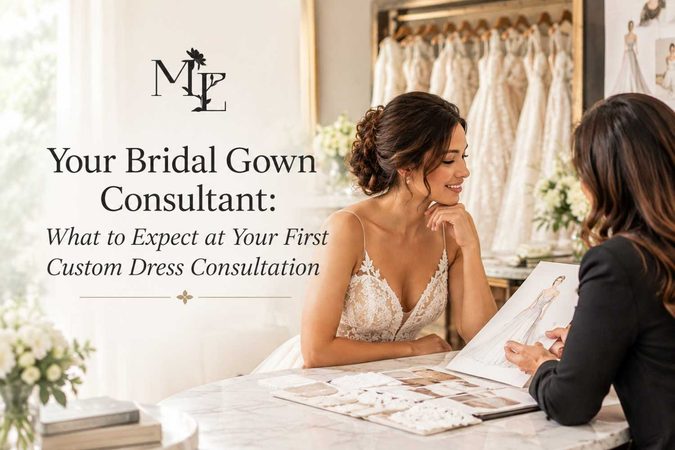
What is a Bridal Gown Consultant?
A bridal dress consultant is a professional who helps a bride understand what she wants from her wedding gown and translate that vision into a design that feels personal, beautiful, and wearable. A bridal gown consultant considers more than a dress’s appearance, taking into account the bride’s proportions, personal style, wedding setting, comfort, preferred fabrics, and the details that will make the finished gown feel distinctly hers.
At a custom bridal design studio, this role becomes especially collaborative. Instead of simply presenting dresses from a collection, the consultant helps shape the gown from the beginning. The conversation can cover silhouette, neckline, sleeves, fabric, lace, embellishment, train length, structure, and proportion.
The goal is not to decide what you should wear. It is to help you make thoughtful design decisions so the finished gown reflects who you are.
Quick definition: A bridal gown consultant guides a bride through the design process, helping turn her preferences, needs, and ideas into a wedding gown that fits both her body and her vision.
Consultation vs. Fitting: What’s the Difference?
Consultation and fitting describe two different stages of the bridal experience.
A consultation is primarily about discovery and design. You discuss your vision, wedding details, personal preferences, proportions, fabrics, and the overall direction of the gown.
A fitting happens once there is a gown to assess on your body. The focus then shifts toward proportion, comfort, movement, and precise adjustments.
What is a wedding dress fitting?
A wedding dress fitting is an appointment where the gown is assessed on the bride and refined for her individual proportions, comfort, movement, and desired fit. Depending on the construction of the gown, adjustments can involve the bodice, neckline, waist, sleeves, hem, train, or other construction details.
Consultation: What should we create?
Fitting: How should the finished gown fit you?
This distinction is important because your first appointment is not simply an early alterations session. At a custom atelier, it is where the design conversation begins. Detailed fitting information can then be addressed later through the studio’s alterations process.
Before Your Appointment: How to Prepare
Before your wedding dress appointment, you do not need to know exactly what your dream gown looks like. Part of the consultant’s role is helping you discover that. A little preparation can make your bridal dress appointment feel more focused without taking away from the discovery that makes custom design special.
Bring inspiration, not instructions
Save photographs of gowns, fabrics, necklines, sleeves, backs, lace, or details that catch your attention. You do not need to know why you like them. Your consultant can help identify patterns in what you have chosen.
Your images might reveal that you consistently prefer clean silhouettes, romantic textures, structured bodices, delicate embellishment, or dramatic trains, even if you have never described your style that way.
Have a realistic budget range
Knowing your approximate budget helps keep the design conversation practical. Custom work involves variables such as fabric, construction, hand detailing, embellishment, and design complexity, so understanding custom wedding dress cost is part of making informed decisions.
You do not need to know the final price before your appointment. An honest starting range gives your consultant a useful framework for discussing materials and design choices.
Think about your wedding itself
Consider the venue, season, ceremony style, time of day, and atmosphere you are creating. A gown should make sense within the larger setting while still feeling like you.
Choose your guests carefully
Bringing someone you trust can make the experience more enjoyable, but more opinions are not always better. Consider who understands your personal style and will help you stay connected to what you actually want.
Give yourself room to explore
You are not expected to arrive with every answer. Bring your questions, your uncertainty, and even the ideas you are not sure how to explain. Those details can give your consultant valuable insight into what you are looking for.
What Happens During the Consultation
A custom consultation is less about moving through a predetermined rack of gowns and more about building a design conversation around you.
1. The design conversation begins
Your wedding dress consultant will start by understanding what you envision for the wedding and how you want to feel in your gown.
You might discuss dresses you have liked, styles you have rejected, your everyday clothing preferences, the formality of your wedding, or details you have always imagined wearing. This conversation helps separate passing trends from the elements that genuinely feel like you.
A thoughtful consultation also makes room for things that are difficult to put into words. Perhaps you want something romantic without feeling overly traditional, elegant without feeling restrictive, or timeless without appearing predictable. Those nuances matter in custom design.
2. Your proportions become part of the design
Measurements are not simply numbers used to determine a size. In custom gown design, they help inform proportion.
The relationship between the bodice, waist, neckline, sleeves, skirt, and train can influence how the entire silhouette reads on your body. Details such as shoulder width, torso length, waist placement, and hem length can affect how a design should be constructed.
This is one of the fundamental differences between custom design and selecting a standard size. The goal is to develop the gown around the bride rather than expecting the bride to adapt to a predetermined pattern.
3. Fabric and texture enter the conversation
Fabric affects far more than appearance. Its weight, drape, texture, structure, and movement can change how a silhouette behaves.
You may explore lace, satin, silk, tulle, crepe, organza, embroidery, beading, or other materials depending on the design direction. Your consultant can explain how different materials support the shape you want and how they will feel when worn.
This is where visual inspiration becomes more tangible. A photograph can communicate an idea, but seeing and handling materials helps reveal what actually suits the design.
4. The details begin to take shape
Once the broader direction is clear, the conversation can move toward the details that make the gown personal.
That could include a particular neckline, an open or covered back, sleeves, buttons, applique, hand detailing, a train, subtle family references, or an unexpected design element.
The important question is not simply, “What looks beautiful?” It is, “What belongs on this bride?”
At a custom atelier, each decision contributes to the relationship between the gown and the woman wearing it.
Questions Your Consultant Will Ask You
Expect questions that go beyond your favorite silhouette. Your consultant is trying to understand both your aesthetic and your experience of wearing the gown.
You might be asked:
- How do you want to feel when you first see yourself in the finished gown?
- What do you love about the dresses or details you have saved?
- Are there silhouettes, fabrics, or details you already know you do not want?
- How important are movement and comfort to you?
- What is your wedding setting and overall style?
- Are there family traditions or personal details you want reflected?
- Which parts of your figure do you naturally feel most comfortable highlighting?
- Are there areas where you want additional support, coverage, or structure?
- What is your approximate budget and wedding date?
- Are there elements from another gown you would like reimagined rather than copied?
There are no perfect answers. Your responses simply give the consultant more information to work with.
What Happens After: Next Steps Toward Your Custom Gown
The first consultation is the beginning of the design process, not the end of it. Once the direction is established, the next steps can include refining the design, selecting materials, confirming measurements, developing construction details, and preparing for the creation of the gown.
As the design progresses, fittings and refinements help bring the concept into precise alignment with the bride. Proportion, comfort, movement, finishing details, and construction are evaluated as the gown develops.
Understanding the design process and expected timeline beforehand can also make the experience easier to navigate. It gives you a clearer sense of how an initial idea develops into a finished gown and where decisions are made along the way.
If you are ready to move from inspiration to a personalized design conversation, you can book your consultation with Madelange Laroche Bridal Design Studio.
For brides considering custom wedding gowns, the consultation is where the process becomes personal. It is the opportunity to discuss not only what you want your gown to look like, but how you want it to feel when you finally wear it.
Frequently Asked Questions
1. How much does a bridal consultation cost?
Consultation pricing depends on the studio and the type of design service involved. Ask what the consultation includes and whether the fee is applied toward the gown.
2. How long does a custom bridal consultation take?
The length varies according to the complexity of your ideas and the studio’s process. A custom consultation needs enough time for a meaningful design conversation rather than a rushed selection.
3. What if I do not know my bridal style yet?
That is completely fine. Bring the images, details, and feelings you are drawn to. Your consultant can identify patterns in your preferences and help turn them into a clearer design direction.